Table Setting for Guests: Ideas + Practical Layout Guide
Set the Perfect Table
Welcome Every Guest with Style
Hosting guests isn’t about creating a perfect-looking table. It’s about creating a table that feels easy to use, comfortable to sit at, and visually balanced without trying too hard.
Most table settings fail not because they lack items, but because they lack clarity. Too many elements, poor placement, or unnecessary styling makes the table feel confusing instead of welcoming.
A good table setting solves one thing: it makes everything obvious without explanation.
The Basic Table Setting Layout (What Goes Where)
A proper table setting follows a simple structure that keeps everything within natural reach.
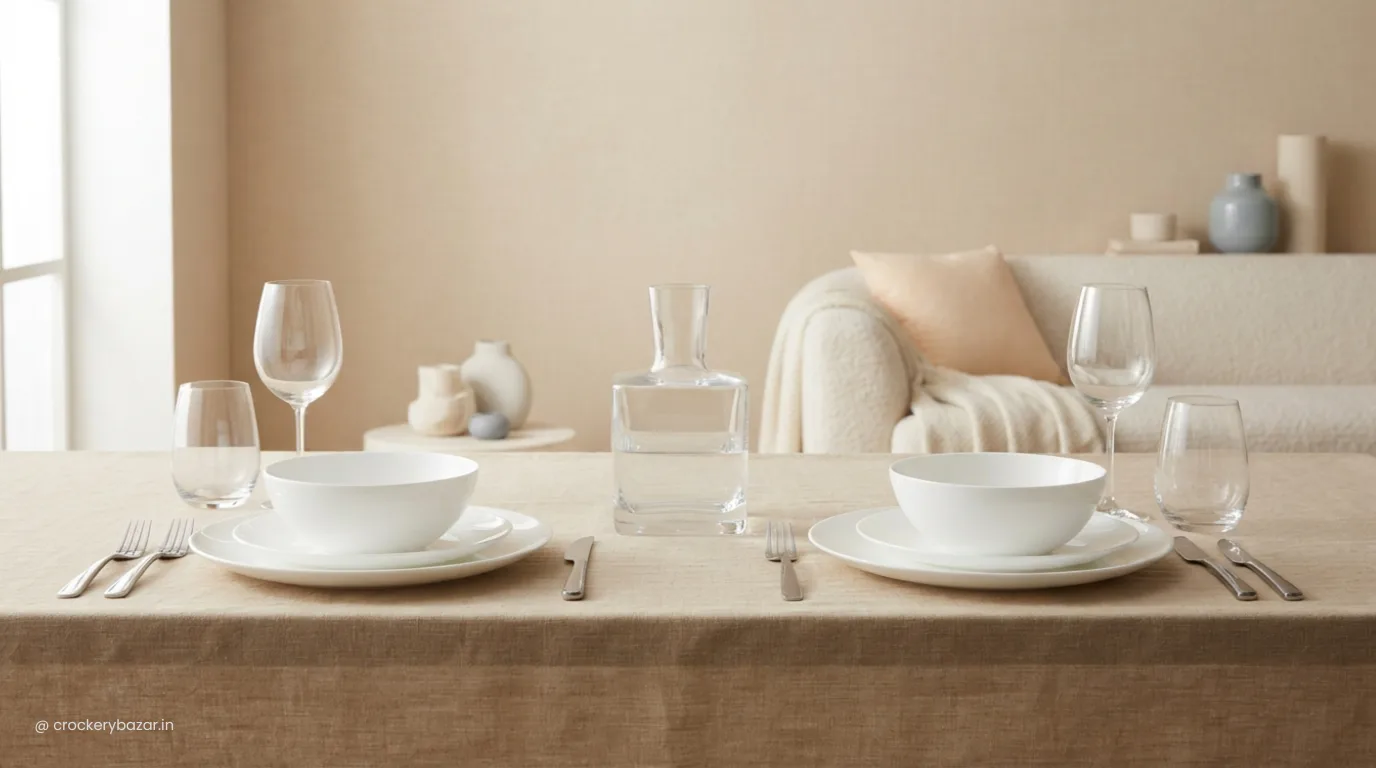
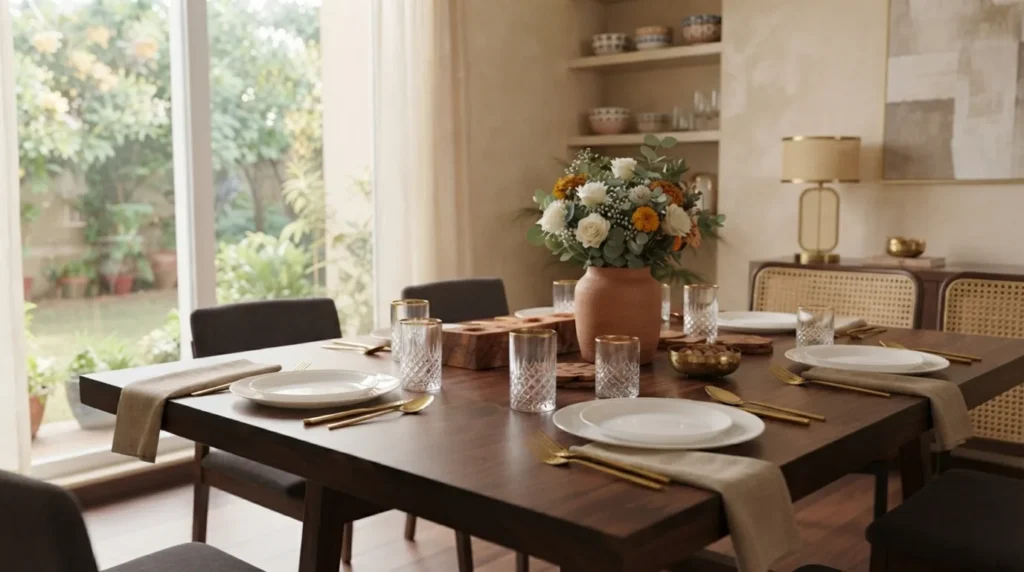
The plate always sits at the center of each seat. To the left of the plate is the fork. To the right are the knife and spoon, with the knife blade facing inward toward the plate.
Above the plate, slightly to the right, is where the glassware goes. This area should feel aligned, not scattered.
If you imagine the setup from above, everything forms a clean, horizontal flow. Nothing overlaps, nothing feels cramped, and each item has its own space.
Once you understand this layout, you don’t need to guess placement again.
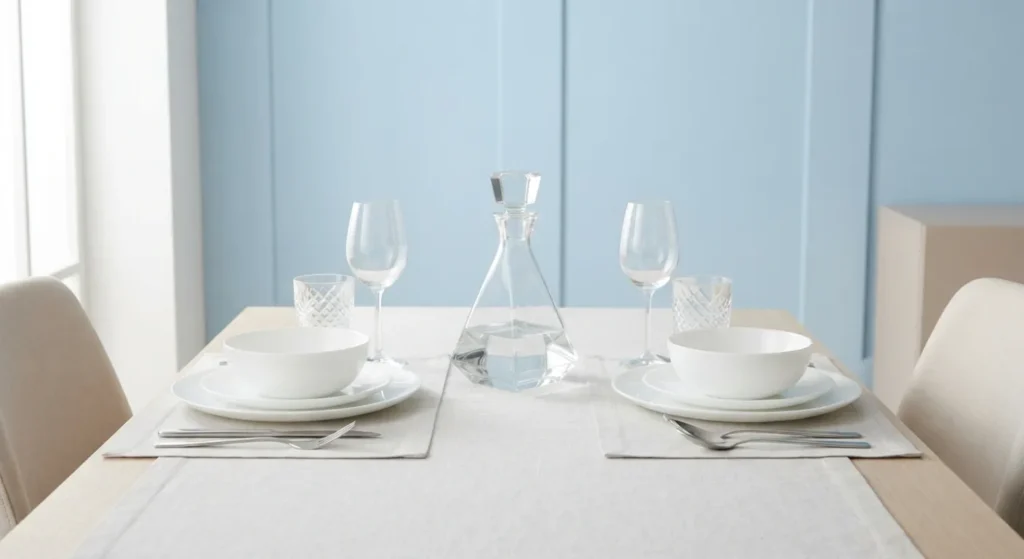
Where to Place Glassware (The Detail That Changes Everything)
Glass placement is where most tables either look organized or instantly feel off.
The water glass is always the primary glass and should sit directly above the knife. If you’re adding ajuice glass, it goes slightly to the right of the water glass. If wine is being served, the wine glass sits slightly above and between them, forming a soft diagonal or triangular arrangement.The key is spacing. Glasses should never touch each other, and they should not feel pushed too far away from the plate.You don’t need multiple glasses for every setup. For most home hosting, one or two glasses per guest is more than enough. Adding more only works if you are serving specific drinks that require them.
This is one of the simplest ways to make your table look intentional instead of overdone.
Formal vs Casual Table Setting (Know the Difference)
Not every table needs to feel formal, and trying to make every setup “premium” often creates unnecessary clutter.
A casual table setting is straightforward. One plate, one fork, one knife, one spoon, and one glass. It works for everyday meals, small gatherings, and relaxed hosting.
A formal setting adds layers. You may see a charger plate under the main plate, separate forks for different courses, and more than one glass depending on the drinks being served.
For most homes, a semi-casual approach works best. It keeps the table clean while still feeling thoughtful. Trying to replicate a hotel-style formal table usually makes things harder for both the host and the guests.
How to Set a Dining Table at Home (Simple Sequence)
Start by placing all plates evenly across seating positions. Make sure the distance between each setting is comfortable, not tight.
Add bowls if needed, either centered on the plate or placed slightly above it depending on what you’re serving.
Place the cutlery next, keeping alignment straight and spacing consistent.
Then arrange the glassware above the plate on the right side. This is where small adjustments make a big visual difference, so take a moment to align them properly.
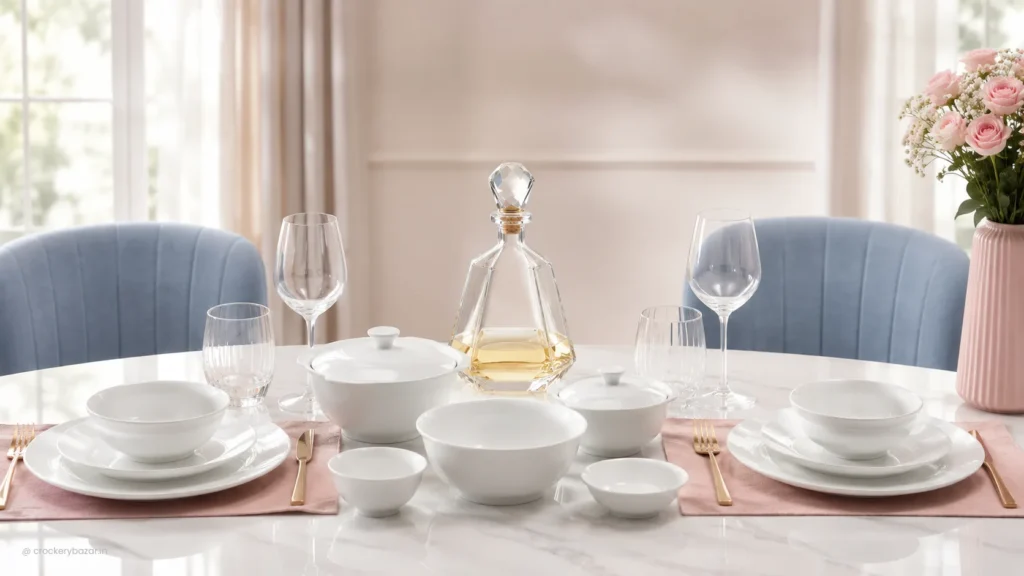
Finally, add any shared items like serving bowls, a water jug, or a simple centerpiece. Keep these slightly away from individual settings so the table doesn’t feel crowded.
If you follow this order, the setup comes together naturally without overthinking.
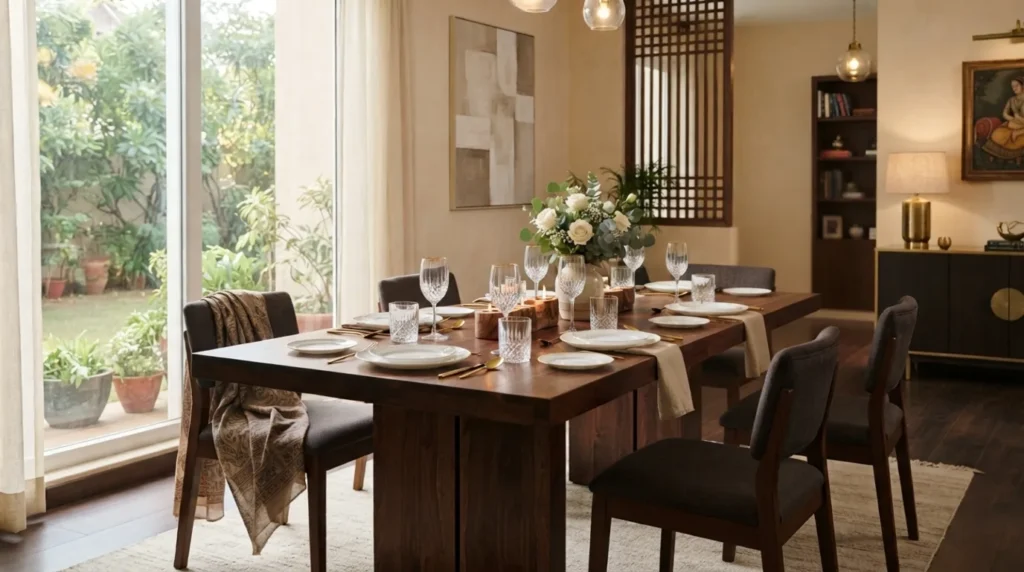
Common Table Setting Mistakes (And How to Avoid Them)
The most common mistake is adding too many items. Extra glasses, unnecessary decor, and oversized centerpieces make the table harder to use.
Another issue is poor spacing. When plates and glasses are too close, the table feels uncomfortable even if it looks full.
Height is often overlooked. A centerpiece that blocks eye contact immediately disrupts conversation, which is one of the main purposes of gathering.
Mismatch is another problem. Mixing too many styles of glassware or table items makes the setup look unplanned rather than styled.
Fixing these mistakes doesn’t require adding anything new. It usually means removing what isn’t needed.
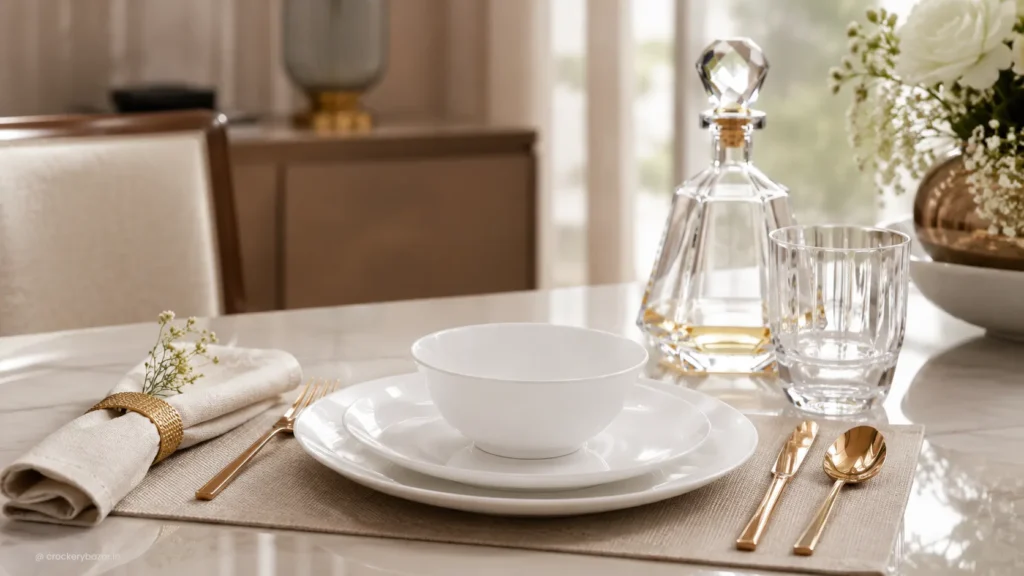

Table Size and Spacing (What Most People Ignore)
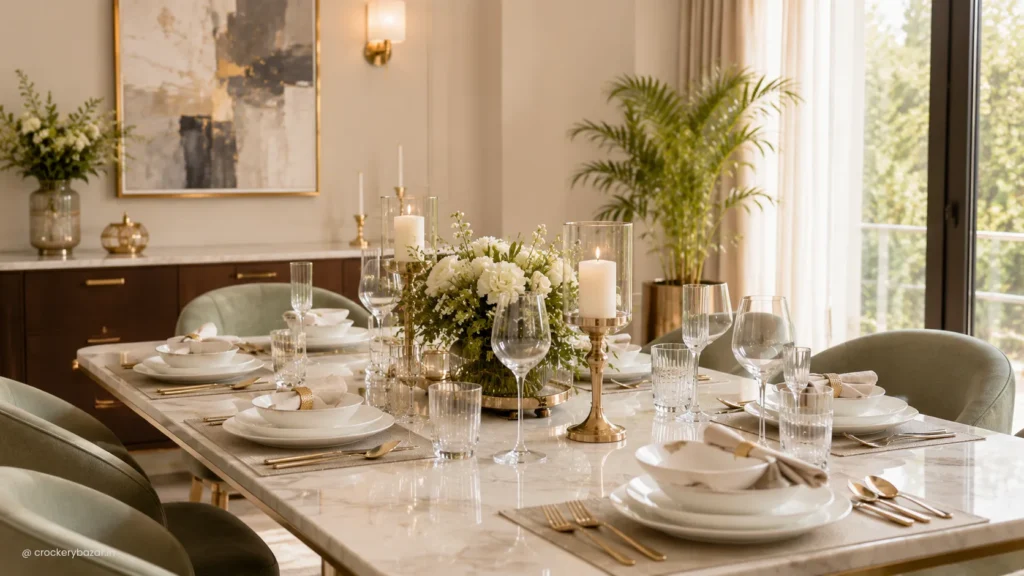
A good table setting is as much about spacing as it is about placement.
For a table of two, you have more flexibility, but keeping things minimal works best.
For four people, each setting should have enough elbow room so guests don’t feel restricted while eating.
For six or more, spacing becomes critical. Shared items like serving bowls and jugs should be placed so they are accessible without reaching across multiple people.
If the table starts feeling tight, it’s a sign that too many elements have been added. Reducing items improves both comfort and appearance.
A Simple Rule That Always Works
If you’re ever unsure, follow this:
A clean base, well-placed glassware, and one controlled focal point are enough.
You don’t need more elements. You need better placement.
Final Thought
A well-set table isn’t about adding sophistication. It’s about removing confusion.
When everything is placed where it should be, guests don’t have to think about how to use the table. They simply sit down and enjoy the experience.
That’s what makes a table setting feel complete.